The rule of thumb
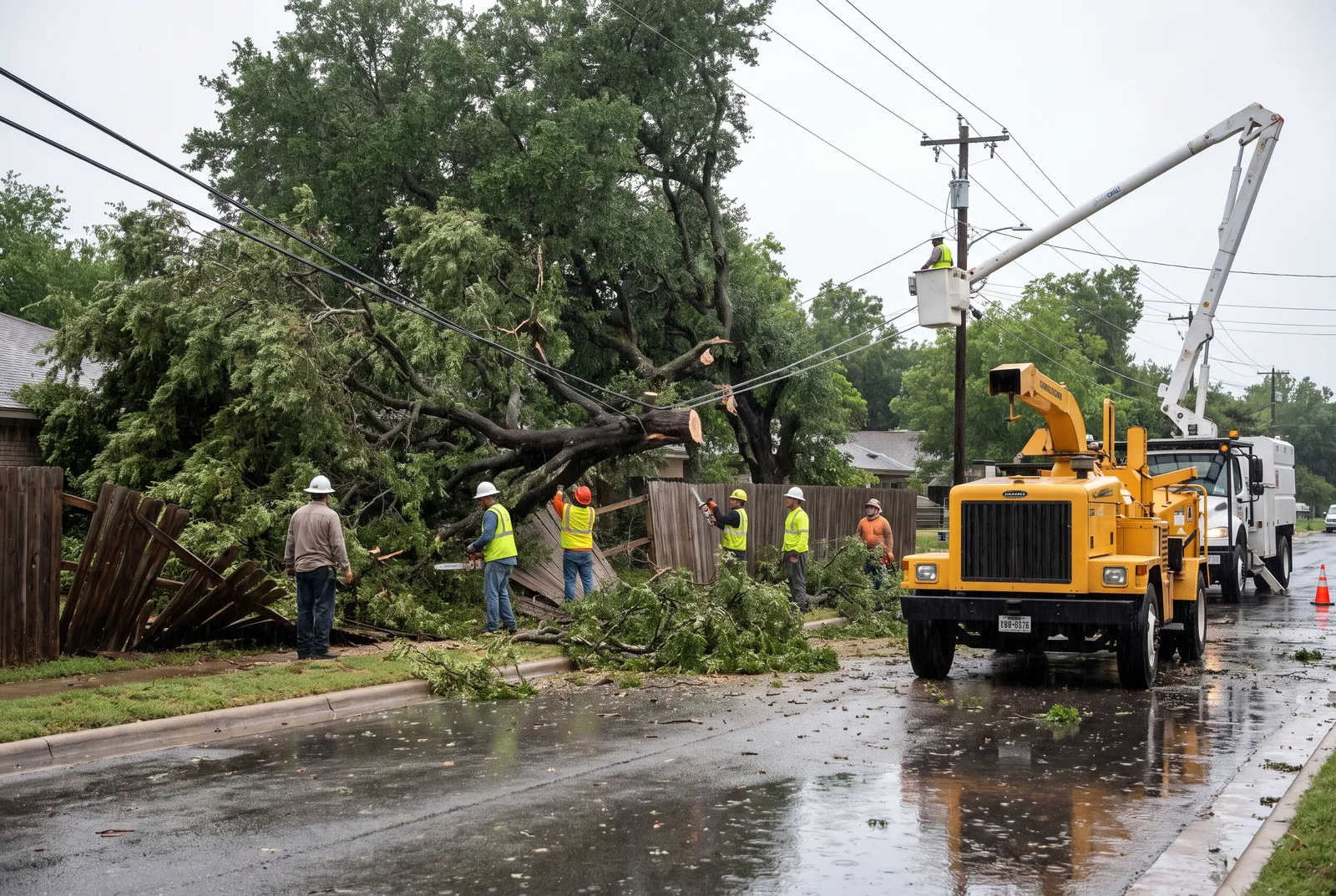
Standard Texas homeowners policies cover tree removal when a tree — yours or a neighbor's — falls because of a covered peril (wind, hail, ice, lightning, the weight of ice and sleet) and damages a covered structure: the house, an attached patio cover, a detached garage or shed, a fence. The policy pays to repair the structure and to remove the tree from it, and most include a separate, capped allowance for debris removal — commonly $500 to $1,000 per tree, sometimes a percentage of the dwelling limit. A tree that falls in the yard and hits nothing is generally not covered, no matter how big the cleanup bill.
Common situations
Tree on the house
Covered, less your deductible. Removal from the structure, repair of the roof, and debris removal up to the cap. In Texas the deductible on a wind or hail claim is often a percentage of the dwelling coverage — 1 or 2 percent — rather than a flat amount, so check your declarations page before you file.
Tree across the driveway
Many policies cover removal of a tree that blocks a driveway or a handicap-access ramp even if it hit nothing else. Check yours.
Tree in the yard, nothing hit
Usually not covered. This is the one that surprises people after an ice storm.
The neighbor's tree on your house
Your policy pays, your deductible applies. Your insurer may pursue the neighbor's insurer only if the tree was a known hazard the neighbor ignored — which is why documenting a dead post oak next door, in writing, matters.
Your tree on the neighbor's house
Their policy, unless your tree was visibly dead or hazardous and you'd been told. A dead post oak you've been meaning to get to is exactly the case that shifts liability.
Preventive removal
Never covered. Insurance pays for sudden damage, not maintenance. Removing the split cedar elm before it falls is on you — and cheaper than the deductible plus a roof.
What to get from your tree service
- Photos of the tree on the structure before anything is cut, with the address visible if possible.
- An itemized invoice that separates removal from the structure from debris cleanup, so the adjuster can apply the right line and cap.
- A short written description of the hazard and what was done, dated.
- The company's certificate of insurance — your adjuster may ask, and you should anyway.
Watch for
Crews that offer to "waive your deductible," bill the insurer directly or want you to sign an assignment of benefits. Texas law requires you to pay your deductible, and since 2019 it has been illegal for a contractor to offer to waive it. A tree service works for you, gives you the paperwork, and you handle the claim. After the 2021 freeze, the 2022 tornado and the 2023 ice storm, the storm chasers who rolled through Williamson County did a lot of damage of their own.
Common questions
Will my rates go up if I file a tree claim?
A single weather claim usually has less effect than a liability claim, but it counts, and Texas insurers have been tightening. For a claim close to your deductible it's often not worth filing. Ask your agent before you do.
Does insurance cover the stump?
Debris removal allowances sometimes cover grinding the stump of a tree that hit a structure; often they don't reach that far. Ask.
Does insurance pay for a tree that fell on my car?
That's your auto policy's comprehensive coverage, not the homeowners policy.
Can you bill my insurance company directly?
No, and be wary of anyone who offers to. We give you the photos and the itemized invoice; you submit the claim and the insurer pays you.
What if the tree is on the power line?
Georgetown Utility Systems handles the line and usually the tree that's on it, at no charge. Everything else on the ground is a normal claim.
Related: Emergency tree service · Storm cleanup · Insurance & financing · Cost guide