Williamson County tree work, done right the first time.
Tree removal, oak-wilt-safe pruning, cedar clearing, stump grinding and 24/7 storm response across Georgetown and all of Williamson County — with an ISA Certified Arborist on staff, insurance you can actually see, and a crew that knows a Heritage live oak from a volunteer hackberry and which month it's safe to touch either one.
ISA Certified Arborist on staff · Insured for tree work · Free on-site estimates · Written price before we cut
A tree company built for live oaks, limestone and the oak wilt calendar
Tree removal
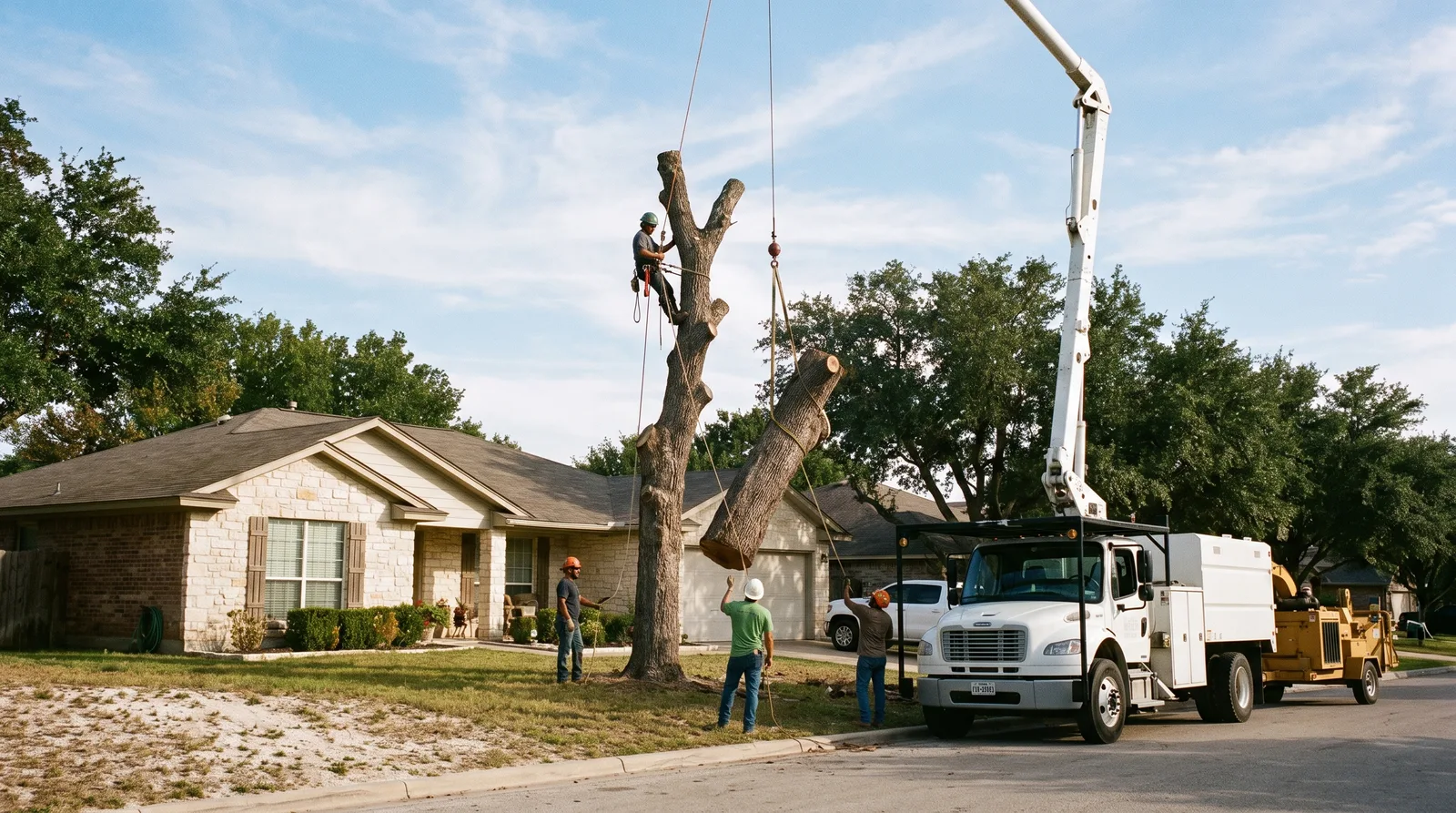
Dead, dying, leaning and in-the-way trees taken down safely — climbed and rigged over the house and the service drop, craned when that's the smart way, dropped whole when there's room.
Removal & pricing →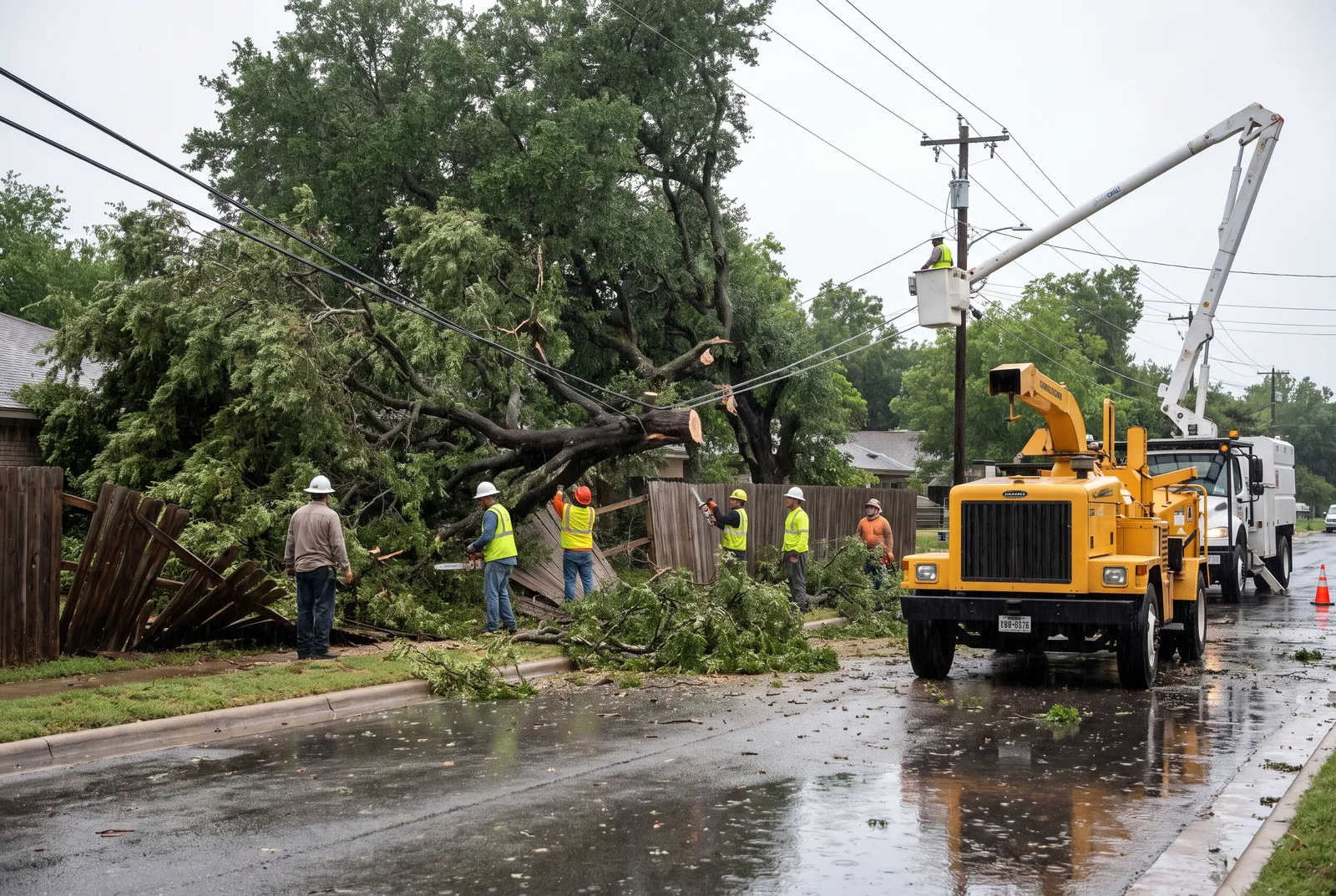
Emergency & storm service
Pecans on roofs, live oak limbs across driveways, hangers over the sidewalk after an ice night or a supercell — answered any hour, with the photos your insurer will want.
24/7 storm service →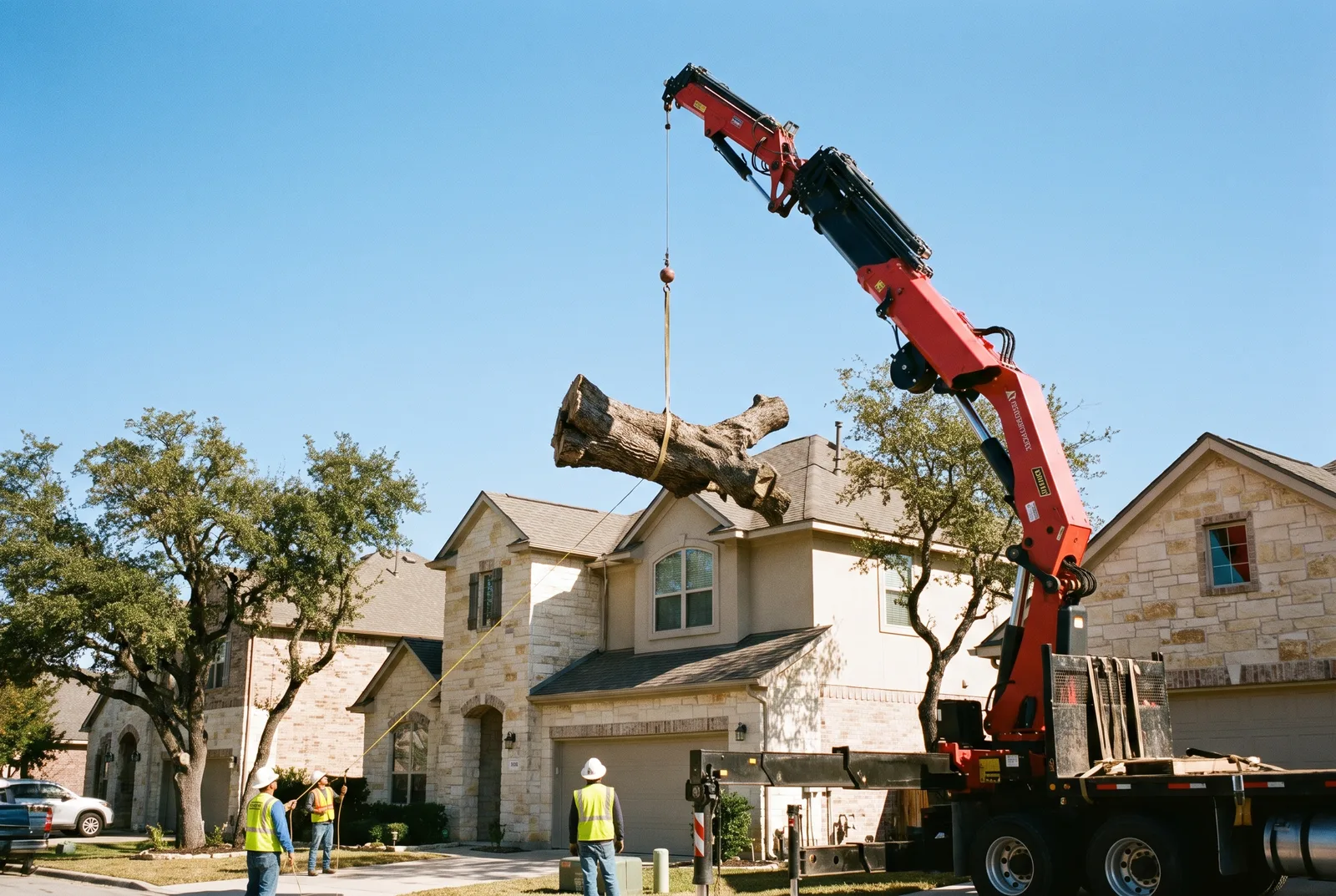
Crane tree removal
Big oaks and pecans lifted out over the roof in a morning instead of rigged down for two days over your pool.
Crane removals →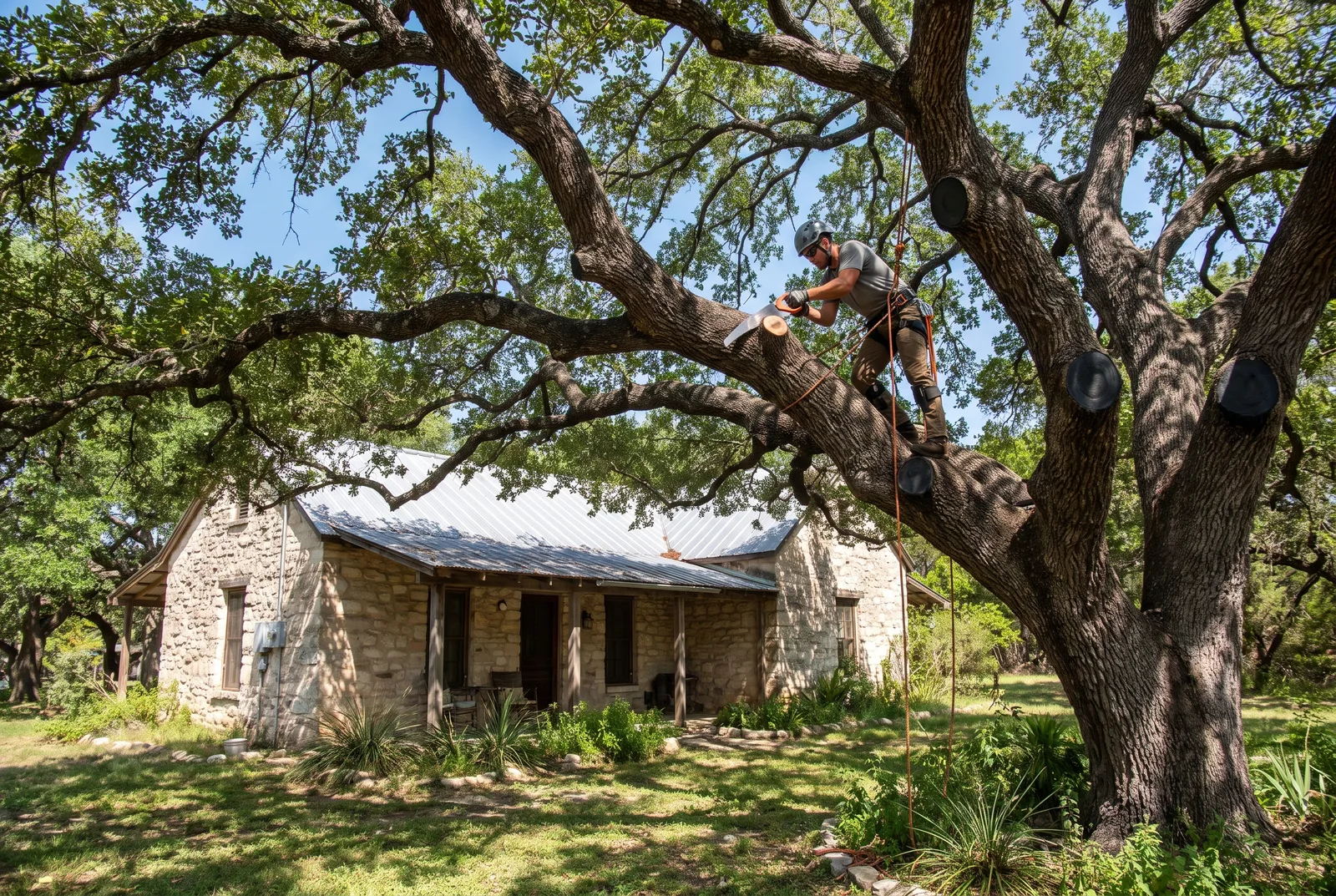
Tree trimming & pruning
Crown cleaning, deadwooding, structural pruning and clearance from roofs, wires and driveways — cuts at the collar, painted on oaks, never topped.
Trimming & pruning →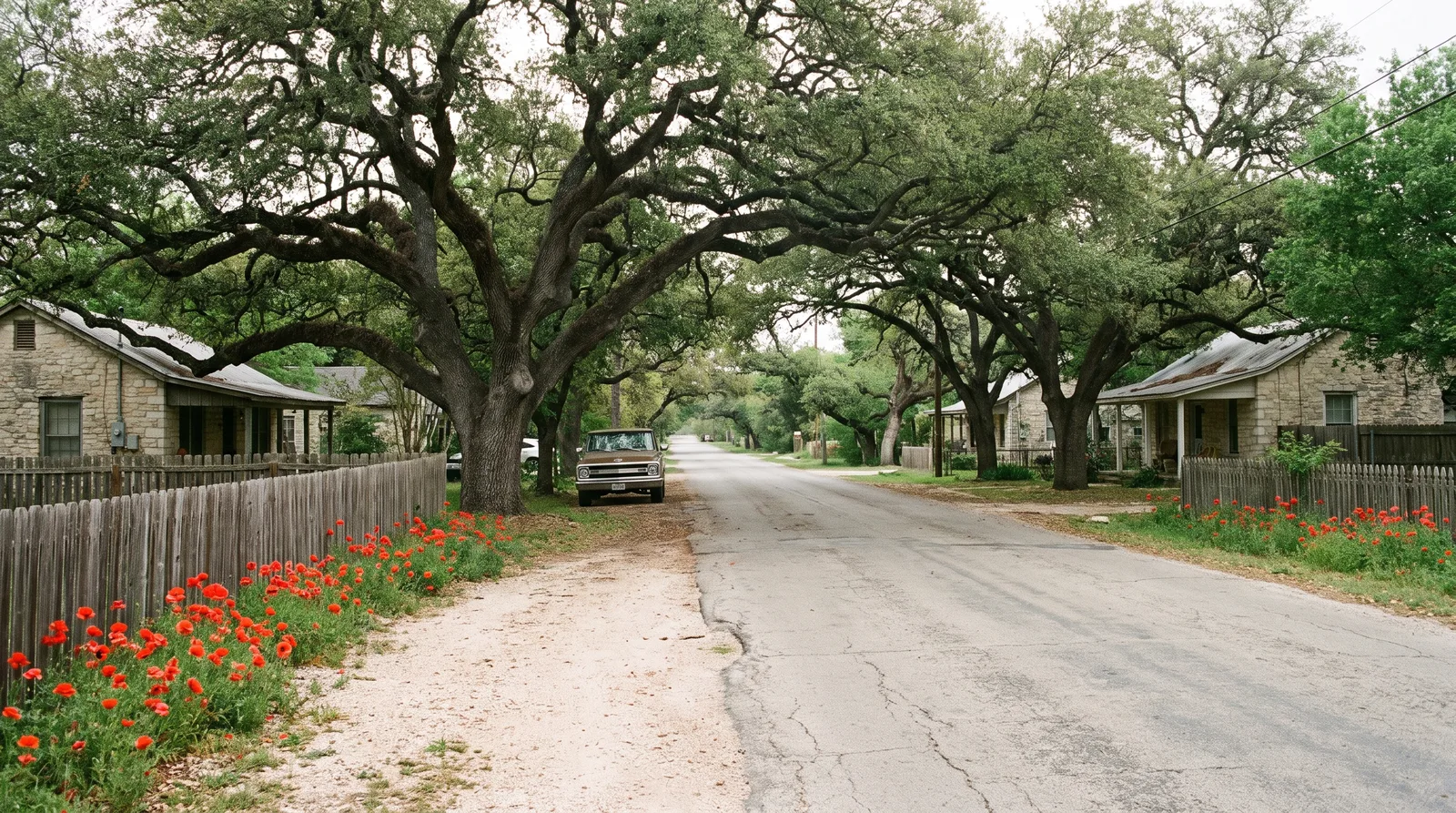
Live oak & post oak care
The two trees over most Georgetown roofs, pruned on the oak wilt calendar, thinned for ice, and left alone when leaving them alone is the right answer.
Oak care →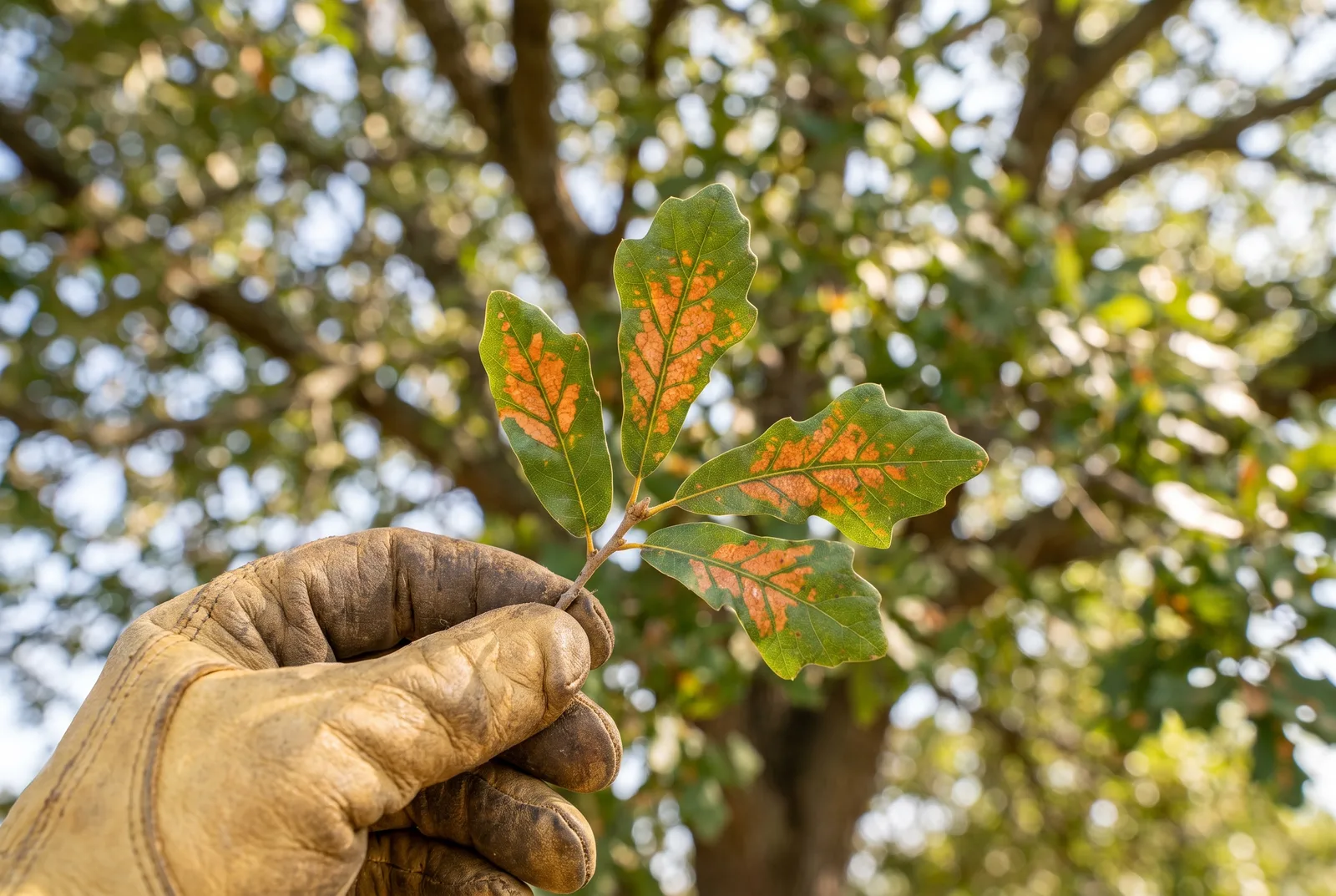
Oak wilt evaluation
Veinal necrosis, a red oak that died in a month, a neighbor's infection center 75 feet away — diagnosed honestly, with the trenching and injection options laid out.
Oak wilt →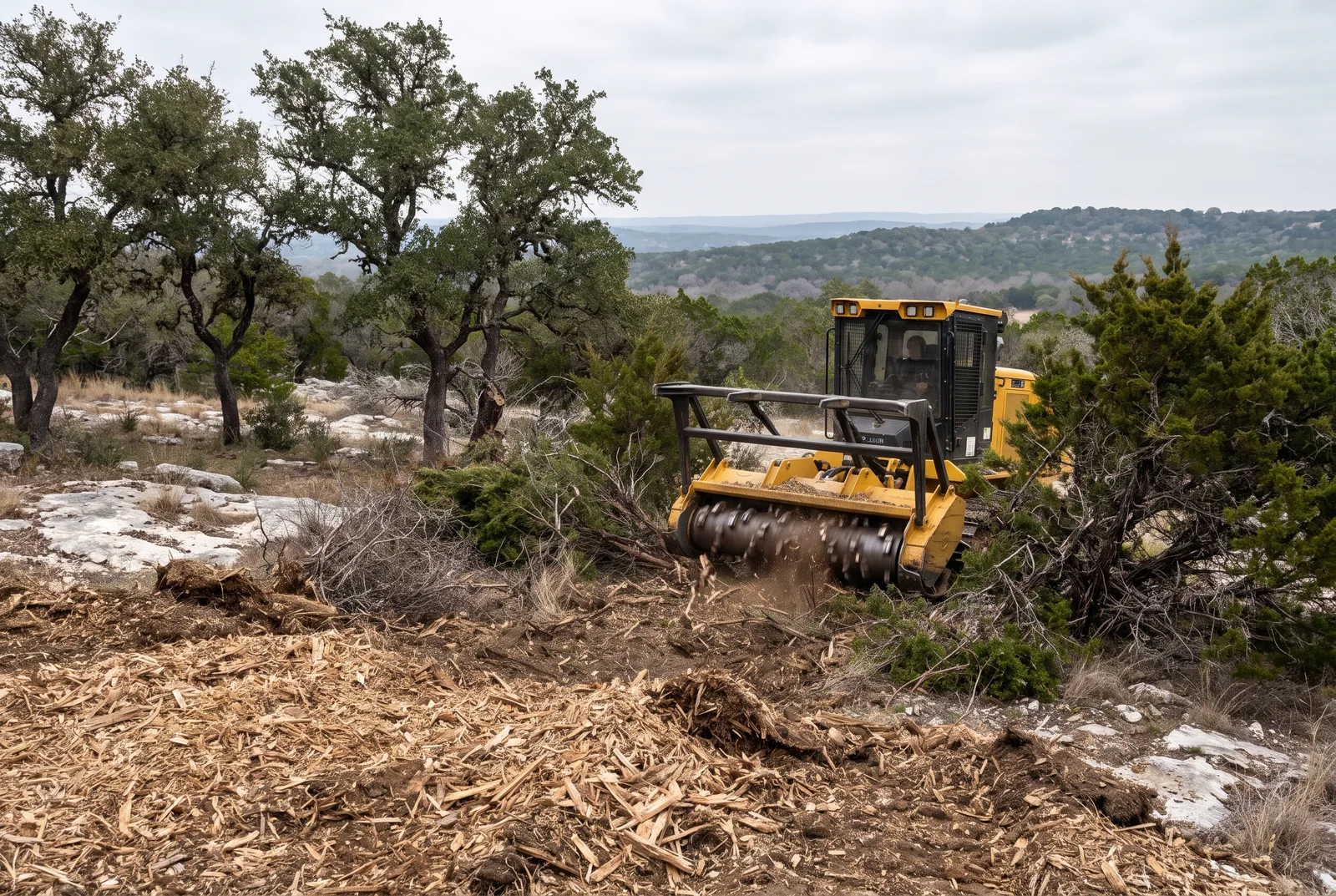
Cedar & lot clearing
Ashe juniper thickets mulched off Hill Country lots for builds, barns, views and pasture — live oaks flagged and kept.
Cedar clearing →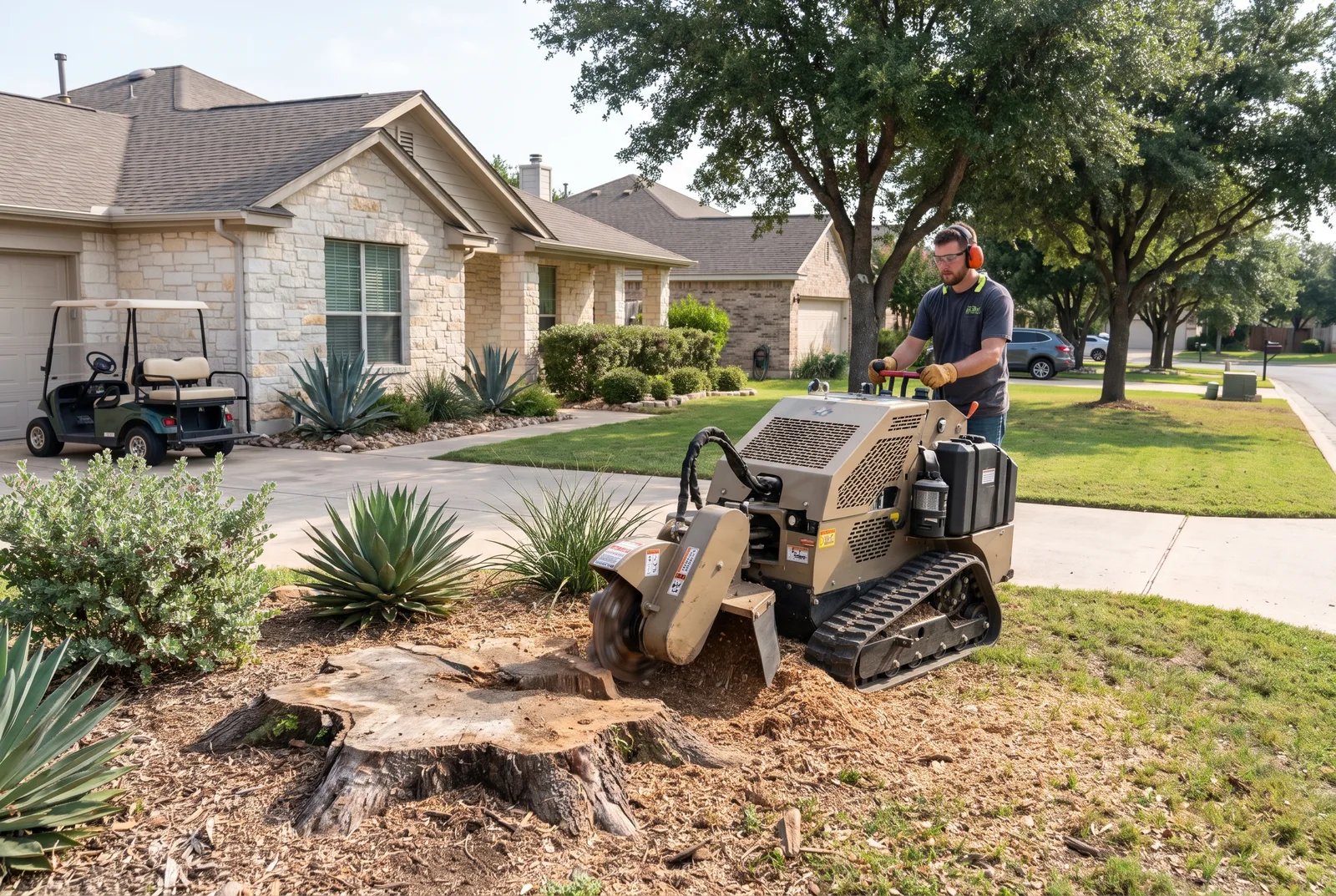
Stump grinding
Stumps ground 8–12 inches below grade where the limestone allows, roots chased, chips raked, hole backfilled. Texas 811 called first.
Stump grinding →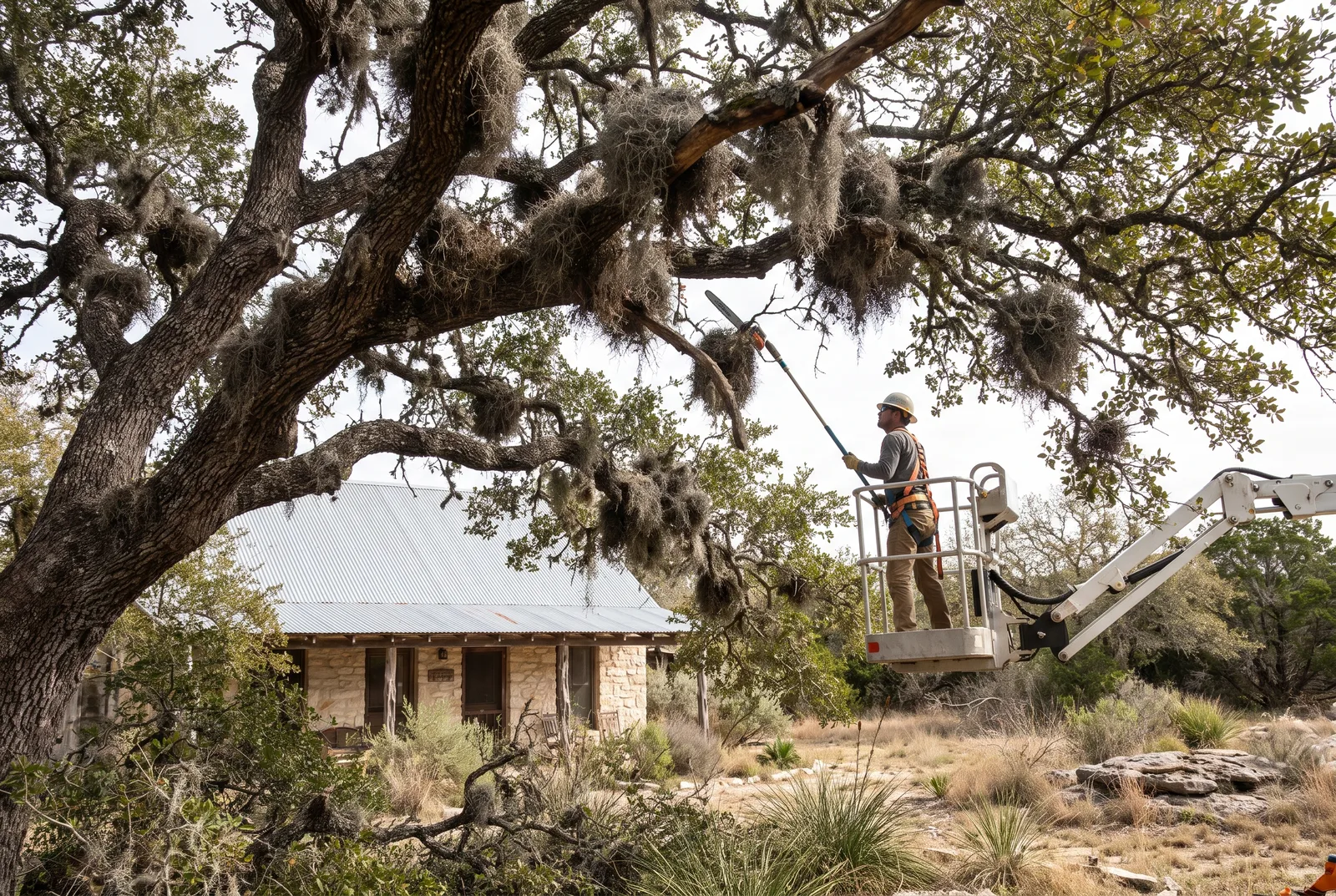
Ball moss & mistletoe
Ball moss cleaned out of live oak interiors, mistletoe cut back to the branch — the two things Sun City asks about most.
Ball moss & mistletoe →Does the city have a say in your tree?
Georgetown rewrote its tree preservation rules in September 2025 (UDC Chapter 8, Ordinance 2025-54). Three numbers decide almost every residential job. We measure at 4½ feet and check your plat before we quote.
Heritage Tree — permit anywhere
A live oak, post oak, Shumard, bur, chinquapin or Monterey oak, bald cypress, elm, pecan, walnut, Texas ash or magnolia 26 inches or more across needs a Tree Removal Permit on any lot in the city or ETJ. Mitigation runs 3 inches planted or paid for every inch removed; pruning more than 30% of the crown counts as a removal.
Protected Tree — commercial only
Any other tree 12 inches and up (hackberry, cedar, chinaberry, tallow and mesquite excluded) is Protected on commercial and multifamily land and needs approval there. On a single-family lot, a Protected tree that isn't a Heritage tree is yours to remove.
The plat-date exemption
Residential lots platted before February 13, 2007 are exempt from Section 8.02 entirely. Dead or fatally diseased trees — confirmed by a certified arborist — owe no mitigation, and after a declared storm the Planning Director can waive the requirements for hazardous trees.
Four trees that keep our phone ringing
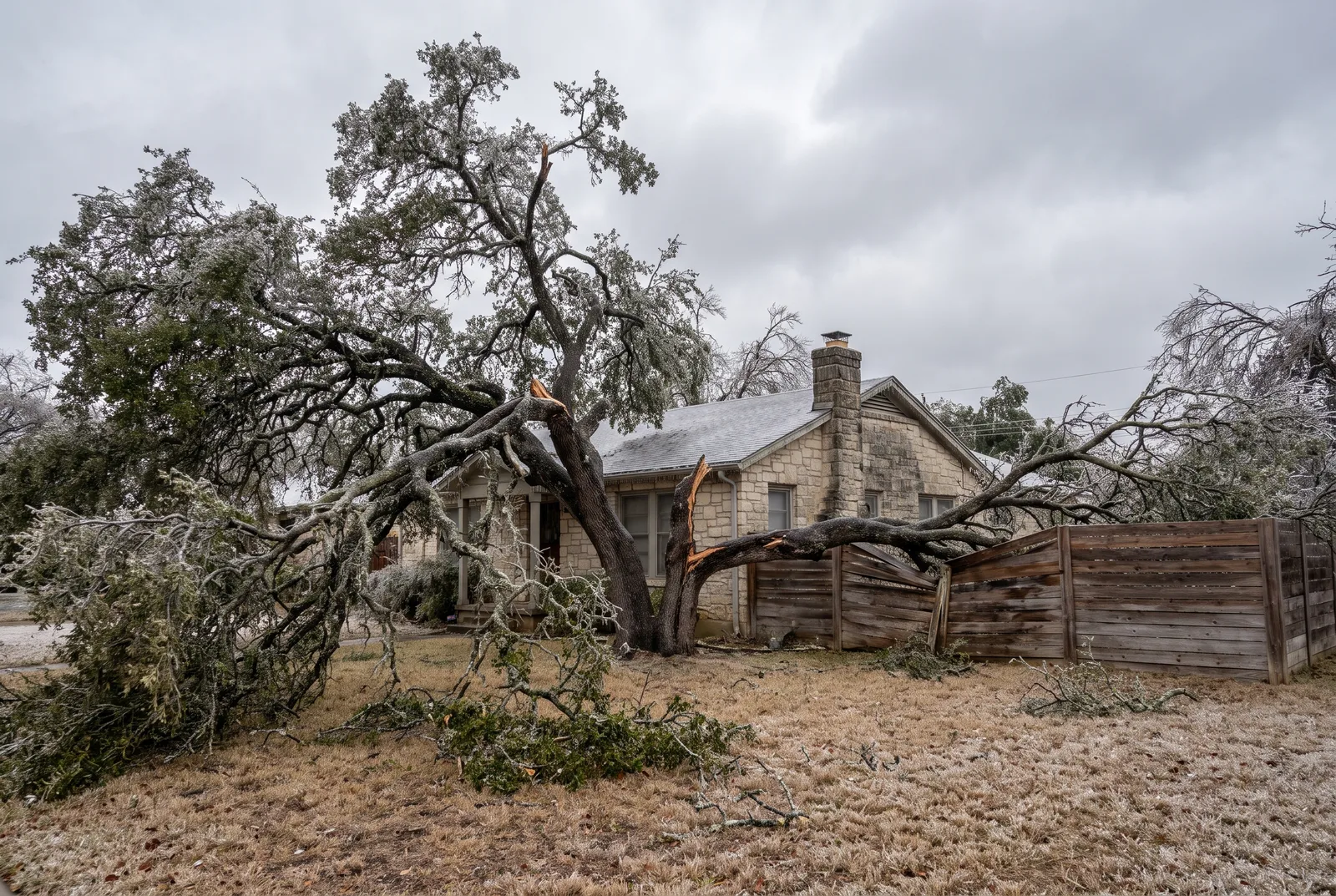
Live oak
The tree Georgetown is built around. Evergreen, so it catches every ounce of ice; long flat leaders that fail at old included-bark forks; roots grafted to the neighbor's live oak, which is how oak wilt travels. Kept with end-weight reduction and cabling, pruned only July–January.
Live oak care →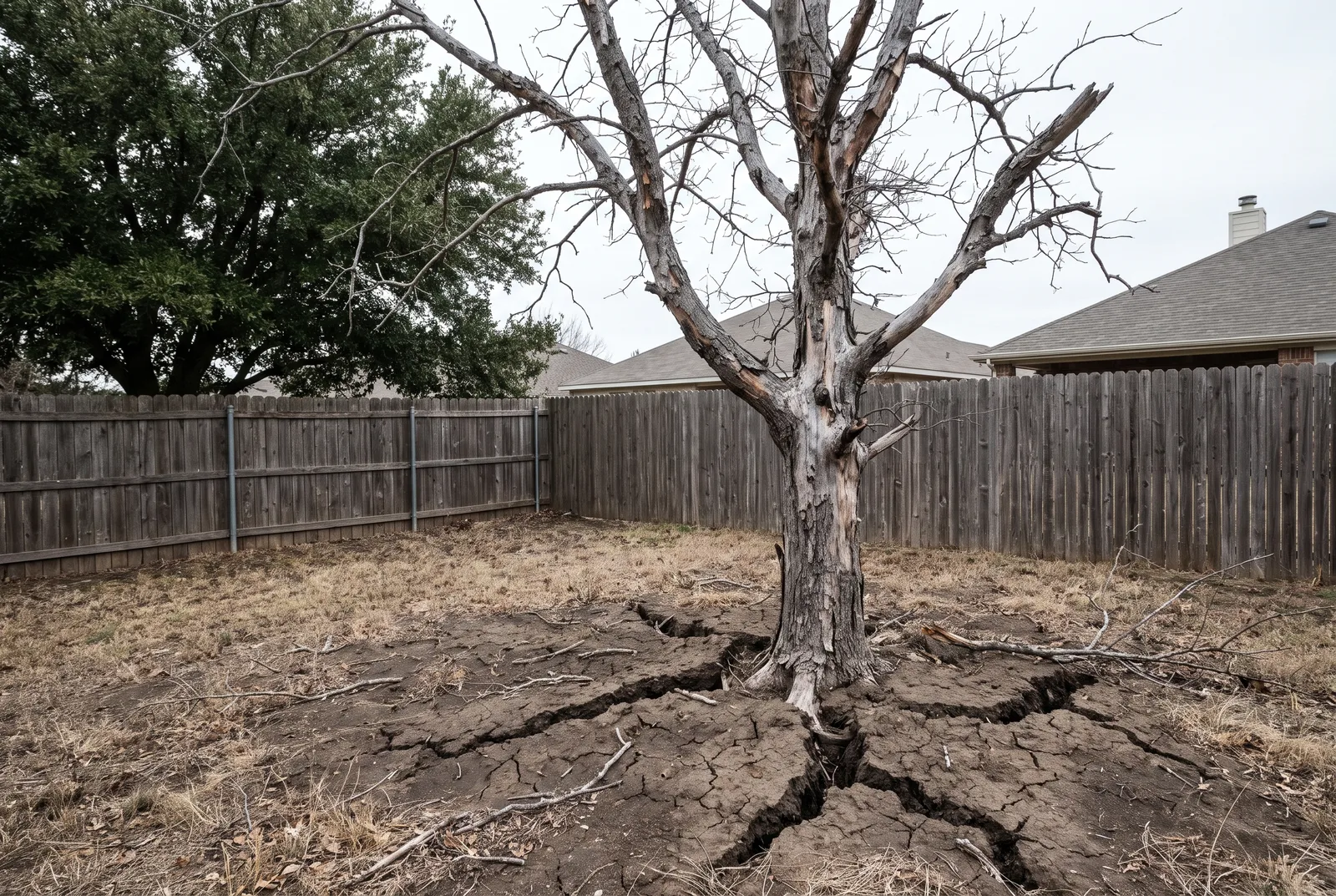
Post oak
Slow, tough and unforgiving. Post oaks hate root disturbance, fill dirt and the summers of 2011 and 2022–23; they die from the top down two or three years after the insult and then get dangerously brittle. A dead post oak over a roof is a bucket-truck or crane job, never a climb.
Why post oaks die →Cedar elm
The fast shade tree of every 1990s subdivision, and the one most often across the street after a thunderstorm. Weak wood, tight forks, mistletoe in the crown. Worth keeping when it's young and pruned; a removal when a leader has split.
Removal & pricing →Ashe juniper ("cedar")
Native, invasive-acting and the source of cedar fever every January. It crowds out live oaks, hides the view and burns hot. The code doesn't protect it at any size, which is why clearing it is the easy part of a Hill Country build.
Cedar clearing →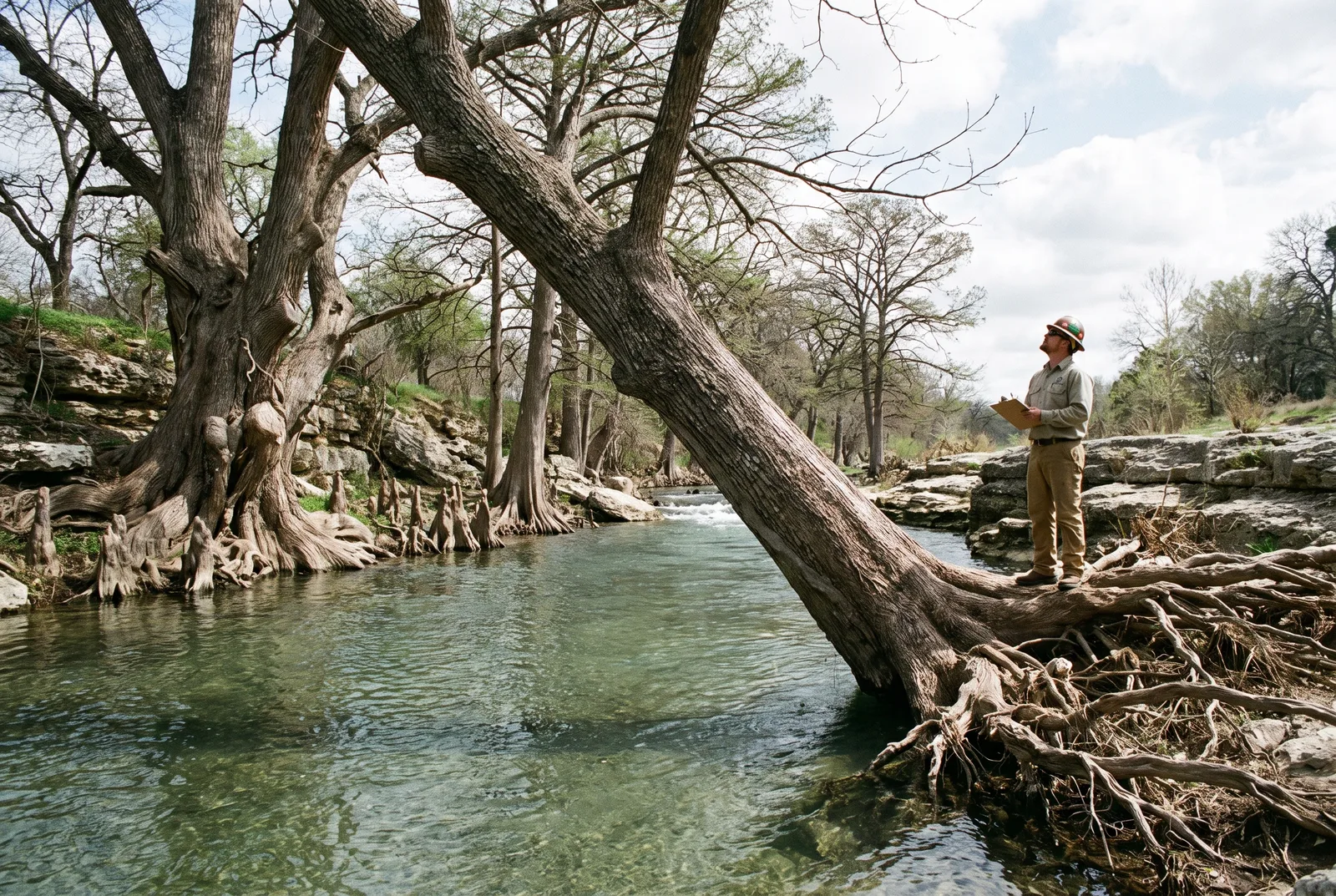
Georgetown sits right on the line between two kinds of ground
The Balcones Escarpment runs through Williamson County roughly along I-35. West of it — Sun City, Berry Creek, Wolf Ranch, out toward Liberty Hill and Andice — the ground is Edwards limestone with a few inches of caliche soil on top. Live oaks and post oaks root wide and shallow there, cedar takes every gap, and a saturated week followed by a windy front levers root plates up out of the rock. East of the line — Old Town, San Gabriel Park, out through Hutto, Taylor and Walburg — it's Blackland Prairie clay that shrinks in August and swells in October, snapping feeder roots and heaving sidewalks. The same species behaves differently on each side, and a tree company that doesn't know which side you're on will price the wrong job.
Then there's the calendar. Oak wilt is active in Williamson County; the no-prune window runs February through June and the disease moves through live oak root grafts at about 75 feet a year. Ice comes every few winters — February 2021 left 30,000 cubic yards of debris on Georgetown curbs and the 2023 storm left nearly 120,000. Spring brings the supercells that produced the 2022 Round Rock tornado; late summer brings the drought that killed post oaks across the county in 2011 and again in 2022–23. Every one of those has a right response and a wrong one.
So we inspect before we sell you anything, prune oaks only in the safe months and paint every cut, cable a live oak that's worth keeping, measure and check the plat instead of guessing about Chapter 8, call 811 before we grind a stump, and stay out of the ten feet around Georgetown Utility Systems' lines the way GUS and OSHA say to. And because we're here year-round, we're the crew that answers when the ice melts — not the out-of-state trucks that appear for two weeks and vanish.
Four steps, no surprises
Call or send the form
Tell us what's going on — a leaning live oak, a dead post oak, a stump in the way, a cedar lot to clear. We answer around the clock.
Free on-site look
Our arborist looks at the tree, the access and what's under it — house, pool, fence, service drop — measures it, and tells you plainly: prune it, cable it, take it down, or leave it alone.
Written price
An itemized price good for 30 days, with the removal, rigging or crane, hauling, stump and any city or HOA paperwork spelled out.
Done, chipped, raked
Most jobs finish in a day. Wood chipped, debris hauled, lawn raked, driveway blown off. Stump grinding scheduled if you want it.
From Old Town and the square to Sun City, Wolf Ranch and Teravista
We're across Georgetown every day: the 1900s-to-1940s streets around the courthouse square and Southwestern University, the big-oak lots of Old Town and San Gabriel Park, the ranch-house neighborhoods off Williams Drive and Austin Avenue, the 4,750 acres of Sun City, and the newer subdivisions in Wolf Ranch, Teravista, Berry Creek, Serenada, Rancho Sienna, Parkside on the River and Santa Rita Ranch.
Beyond the city we cover Round Rock, Leander, Cedar Park, Liberty Hill, Hutto, Jarrell, Florence, Andice, Weir, Walburg and Taylor — all of Williamson County and the edges of Bell, Burnet and Travis.
See the full service area →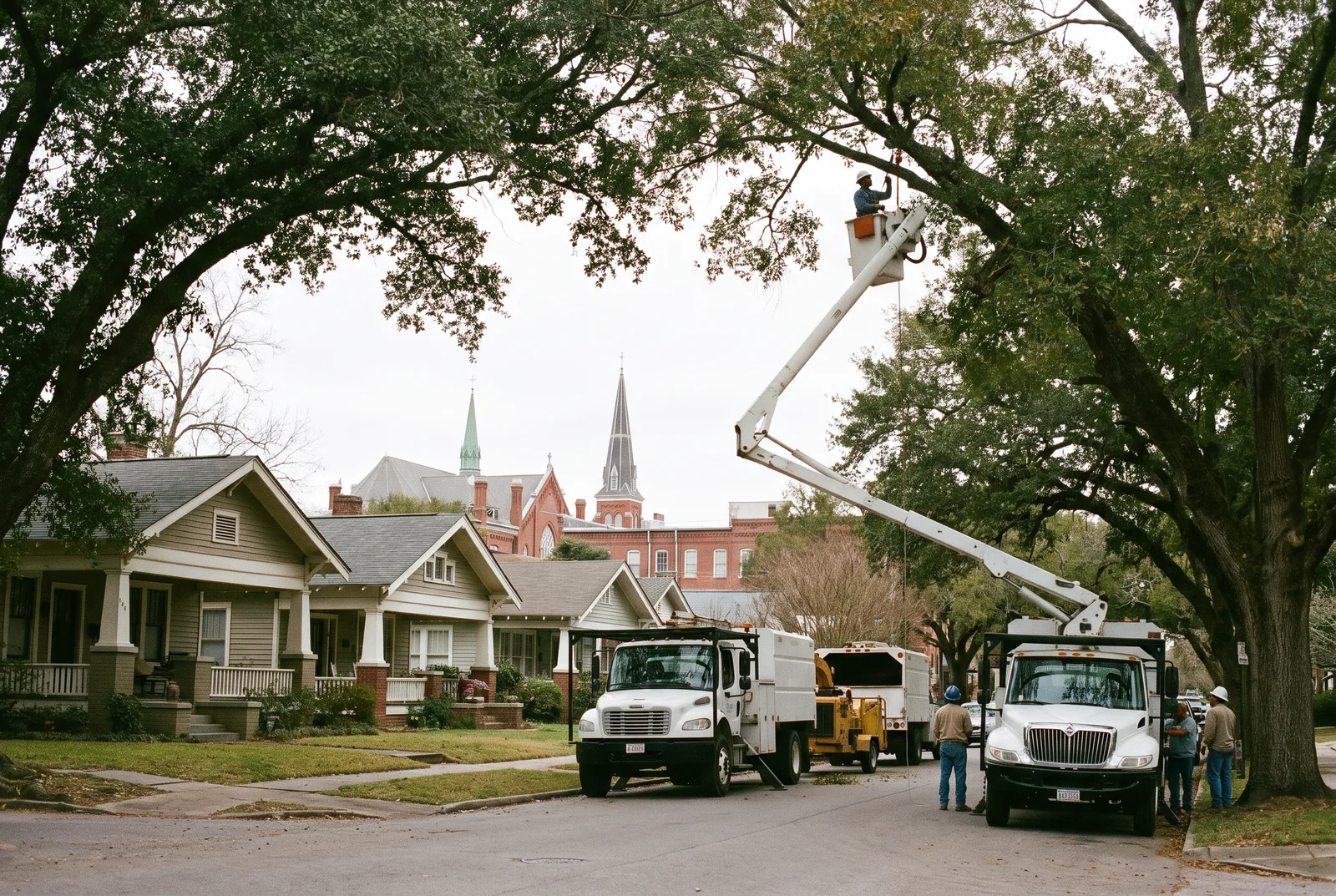
Questions Georgetown homeowners ask us
Do I need a permit to remove a tree in Georgetown?
It depends on the tree, not the address. Georgetown's tree rules are in Chapter 8 of the Unified Development Code (rewritten by Ordinance 2025-54 in September 2025). A Heritage Tree — a live oak, post oak, Shumard, bur, chinquapin or Monterey oak, bald cypress, American or cedar elm, pecan, walnut, Texas ash or southern magnolia that measures 26 inches or more across at 4½ feet — needs a Tree Removal Permit anywhere in the city or its ETJ, on any lot. A Protected Tree (12 inches and up, most other species) needs a permit on commercial and multifamily property but not on a single-family lot. Residential lots platted before February 13, 2007 are exempt altogether, and a dead or fatally diseased tree confirmed by a certified arborist owes no mitigation. We measure, check the plat date and tell you which bucket your tree is in before anything is cut.
How much does tree removal cost in Georgetown?
Most removals in Williamson County land between $450 and $4,500. A small ornamental or a cedar on an open lot is at the low end; a 60-foot live oak or pecan spreading over a limestone ranch, a pool and the service drop — climbed and rigged down piece by piece, or lifted out with a crane — is at the high end. Stump grinding is priced separately by the inch. You get an itemized written price on site before anything is cut.
When is it safe to prune my oaks?
Not from February through June. That's when the fungal mats that spread oak wilt form on dying red oaks and the sap beetles that carry the spores are flying; a fresh cut is an open door. Texas A&M Forest Service and the Williamson County Extension office both say the same thing: prune oaks in the cold months, paint every cut the minute it's made, any month of the year, and sterilize tools between trees. We schedule oak pruning from July through January and paint cuts year-round — storm damage included.
Why did my live oak drop so many limbs in the ice storm?
Because ice is heavy and live oaks keep their leaves. A half-inch glaze on a 30-inch live oak adds roughly 7,000 pounds to the canopy, all of it on limbs that evolved for heat, not load. The January 31–February 2, 2023 storm put nearly 120,000 cubic yards of tree debris on Georgetown's curbs — five to six times what Winter Storm Uri left in 2021. The limbs that failed were long, flat, end-heavy leaders and old included-bark unions. A live oak that's been thinned at the ends and cabled at its weak forks carries ice; one that's been topped or left unpruned for twenty years doesn't.
Do you really answer at 2 AM after a storm?
24 hours a day, every day. The Round Rock tornado of March 21, 2022 damaged 1,122 structures in Williamson County; the 2023 ice storm knocked out power to 3,700 Georgetown Utility Systems customers and buried streets in live-oak limbs; spring supercells and summer straight-line winds take their turn every year. When a pecan is through the roof at 2 AM, the first hour matters. Call, tell us what happened, and you'll get a callback with a plan and a time — not a voicemail box.